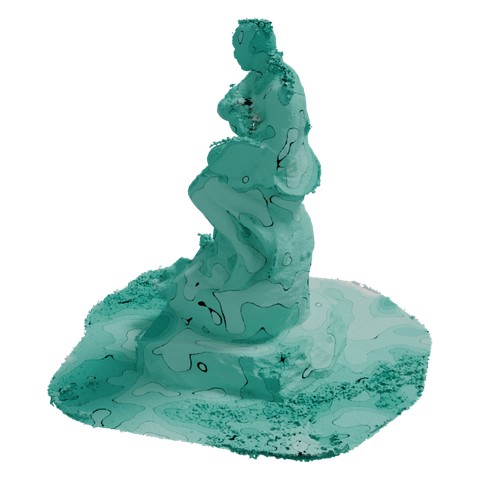
Neural Implicit Energy Optimization for LiDAR Mapping
IEEE/CVF Winter Conference on Applications of Computer Vision (WACV) · 2026
LiDAR mapping as energy optimization over the curvature of a neural signed distance field
I am a PhD student at Purdue University, advised by Aniket Bera. My overarching goal is to bridge physical modeling and scalable surrogate models, with a focus in robotics and reinforcement learning (RL).
I am broadly interested in scalable models for physics and their potential applications in robotics. A core problem driving my research is how to effectively integrate Partial Differential Equation (PDE) formulations and generative priors to provide geometric structure and stabilize continuous control and RL policies.
At a foundational level, I want to address the challenge of learning high-fidelity dynamics in sparse data regimes. My work relies on two core pillars: efficient modeling techniques like model-order reduction, and scalable learning strategies such as lightweight physics-informed learning, leveraging alternatives to autodiff residuals such as Monte-Carlo methods (Walk-on-Spheres).
Outside the lab, I was the 2024 Vice President of Purdue SEARCH. I mentored our NASA SUITS team to the competition finals, earning a NASA Artemis I mission flag that flew around the moon.
A comprehensive list of resources to build an undergraduate-level foundation in ML, Linear Algebra, AI, and Statistics.
Oct 2022A curated collection of papers, books, and resources related to my core research interests.
OngoingBooks I've read each year, with my ratings. Pulled from my Goodreads.
I'm interested in robotics, reinforcement learning, operator learning and PINN.
LiDAR mapping as energy optimization over the curvature of a neural signed distance field
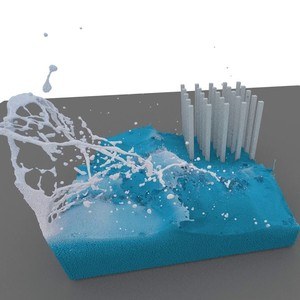
A survey of advances and challenges in data-driven Scientific ML
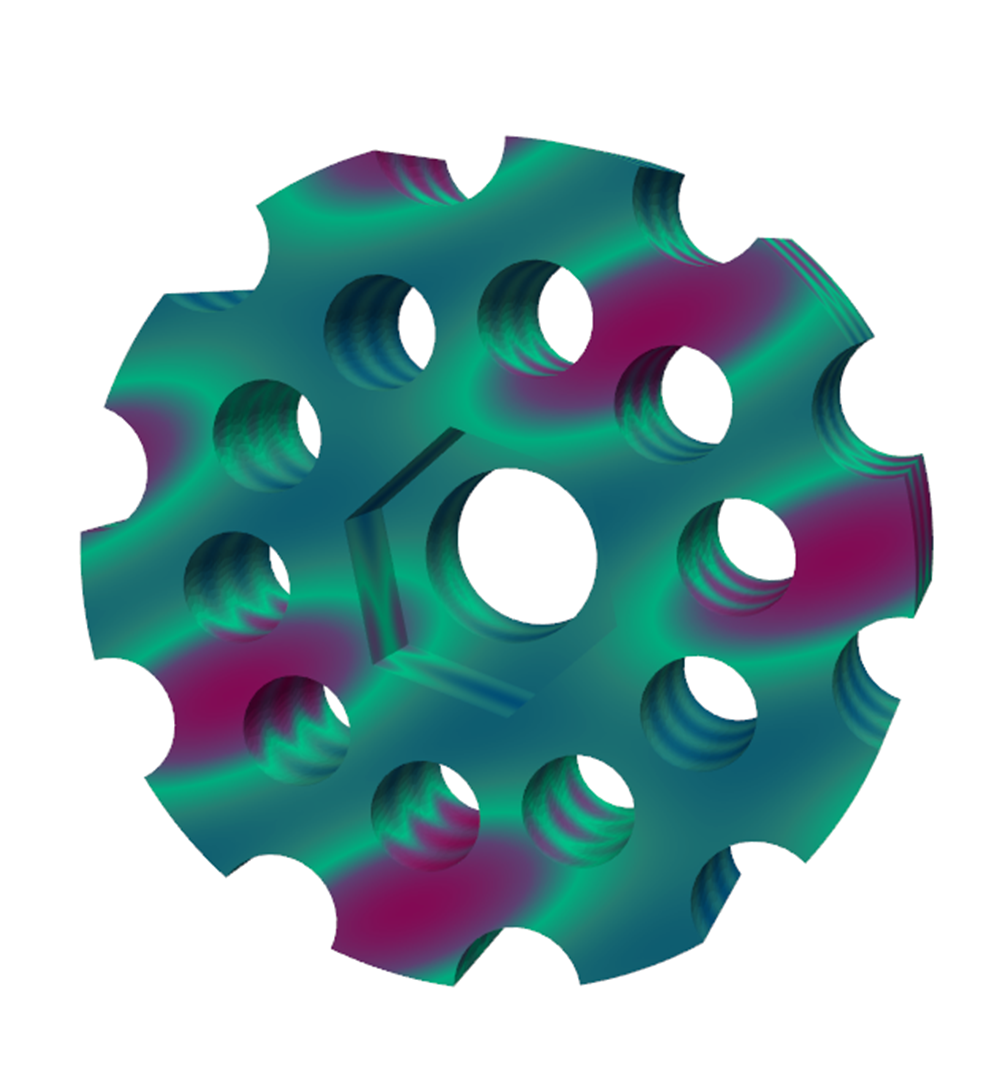
A sampling-based framework that evolves Lagrangian systems directly in physical space using data-driven neural PDE operators and learnable kernel ROM parameterization
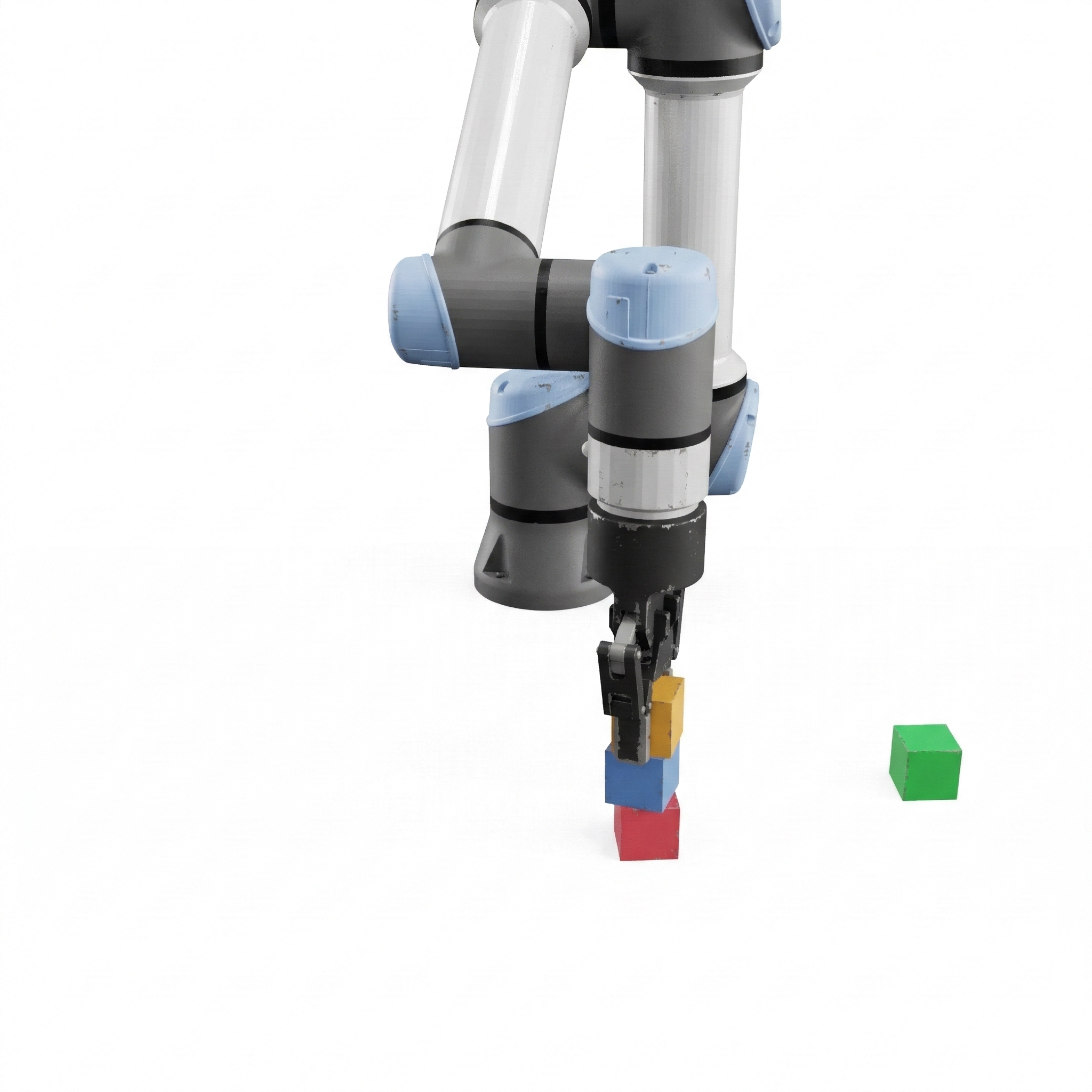
We introduce a physics-informed regularization for offline GCRL derived from the Hamilton-Jacobi-Bellman (HJB) equation’s viscosity solution. By applying the Feynman-Kac theorem, we recast value estimation as a stable Monte Carlo expectation, ensuring geometric consistency and superior performance in high-dimensional navigation and manipulation tasks.
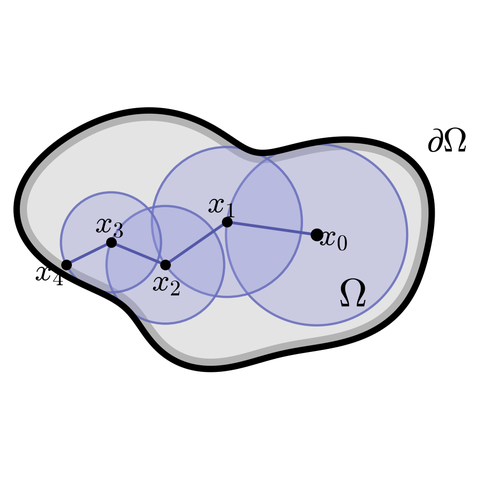
A PINO technique for training operators using Monte-Carlo Walk-on-Spheres

We introduce a resolution-independent neural operator architecture for synthetic frame generation that leverages global convolutions in the Fourier spectral domain via Fast Fourier Transform (FFT).
A decentralized graph neural operator approach for robust and scalable task allocation in heterogeneous UGV-UAV teams.

An Optical Flow-Integrated Markov Neural Operator that models pedestrian trajectory prediction as a Markovian process, eliminating the need for historical state storage.